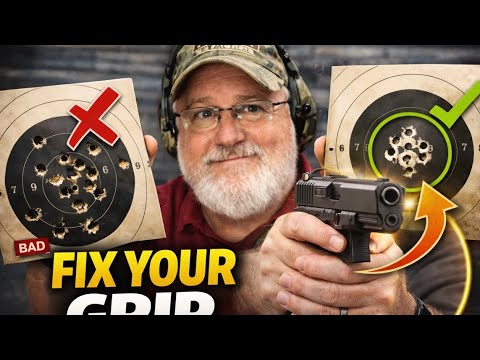
The grip mistake that ruins recoil control

Published on March 16, 2026
Duration: 1:10

This expert-level guide, drawing from a Tenicor video, details a critical grip mistake that hinders recoil control. It emphasizes applying the majority of pressure via the support hand into the buttstock, utilizing a 'grip and hang' technique. This method, popularized by Frank Proctor, involves gripping the rail, relaxing the elbow, and letting arm weight provide linear pressure for efficient recoil management and reduced fatigue.

Quick Summary

The majority of pressure into the buttstock/shoulder should come from the support hand. Pulling on off-axis levers like vertical grips or mag wells causes unintended gun behavior and poor recoil control. The 'grip and hang' technique, by gripping the rail and relaxing the elbow, provides efficient linear pressure without fatigue.

Chapters

  1. 00:00Support Hand Pressure Mistake
  2. 00:30Linear Pressure and Grip
  3. 00:49The 'Grip and Hang' Technique

Frequently Asked Questions

What is the primary mistake that negatively impacts recoil control in firearms?

The primary mistake is applying pressure incorrectly with the support hand. Pulling on off-axis levers like vertical grips or mag wells, or torquing the firing grip backward, disrupts the gun's natural behavior and hinders effective recoil management.

How should the support hand be used for optimal recoil control?

The majority of pressure into the buttstock and shoulder should originate from the support hand. Gripping the rail with the support hand allows for linear pressure application through the buttstock into your body, which is crucial for stable shooting.

What is the 'grip and hang' technique for firearm handling?

The 'grip and hang' technique involves gripping the firearm's rail with your support hand, relaxing your elbow, and allowing your arm's weight to hang. This method provides sufficient, efficient, linear pressure without causing undue muscle fatigue during extended shooting sessions.

Why is avoiding an 'elbow out' position important for recoil control?

An 'elbow out' position can lead to muzzle deviation. If pressure changes, the muzzle might move towards the elbow, compromising accuracy and control. Maintaining a more integrated arm position is key.

Related News

All News →

More Training & Techniques Videos You Might Like

More from Tenicor

View all →