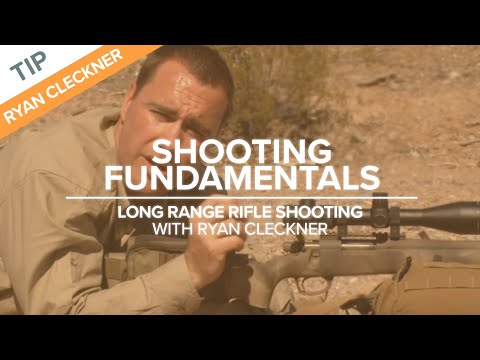
Wind Estimation and Compensation | Long-Range Rifle Shooting with Ryan Cleckner

This video by Ryan Cleckner details essential wind estimation and compensation techniques for long-range rifle shooting. It covers reading mirage, understanding wind's effect throughout bullet flight, and applying a practical compensation formula for .308 caliber. Key advice includes aiming into the wind when calculations aren't feasible and practicing on windy days to build intuition.

Quick Summary

Estimate wind speed for long-range shooting by observing downrange indicators like vegetation, flags, or mirage. Mirage, visible through a scope, shows heat waves; their angle indicates wind speed. The formula (Distance x Wind Speed) / Constant = MOA helps calculate adjustments.

Chapters

  1. 00:00Introduction to Wind Estimation
  2. 00:57Judging Wind Speed: Downrange Indicators
  3. 01:27Reading Mirage for Wind Speed
  4. 03:42Wind Effects Across Bullet Path
  5. 05:13The Wind Compensation Formula (.308)
  6. 07:28Formula Practicality & Simplified Constants
  7. 11:34Wind Values: Full vs. Half
  8. 14:41Practical Aiming & Practice Tips

Frequently Asked Questions

How can I estimate wind speed for long-range shooting?

Observe downrange indicators like vegetation movement, flags, or mirage. Mirage, visible through a scope, shows heat waves; their angle indicates wind speed. Simple methods like feeling wind on your face are less effective for long distances.

What is the wind compensation formula for a .308 rifle?

The formula is: (Distance in 100s of yards × Wind Speed in mph) / Constant = MOA adjustment. The constant varies with distance, typically from 13 at closer ranges to 10 at 900+ yards.

How does wind affect a bullet's trajectory?

Wind pushes the bullet laterally throughout its flight. Because the bullet slows down, it's exposed to wind for longer in the second half of its path, causing greater drift near the target than near the shooter.

What is 'full value' vs. 'half value' wind?

'Full value' wind blows directly perpendicular (90 degrees) to the bullet's path, exerting maximum force. 'Half value' wind blows at a 45-degree angle, exerting only half the lateral force and requiring half the adjustment.

Related News

All News →

More Training & Techniques Videos You Might Like

More from NSSF—The Firearm Industry Trade Association

View all →