Supreme Court Issues Unanimous Decision With Nationwide & Constitutional Implications! What Now?

Published on May 17, 2026
Duration: 9:29

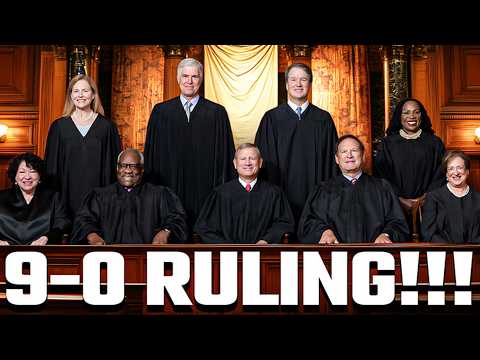
This video discusses the Supreme Court's unanimous 9-0 ruling in favor of the Martin family, who were victims of an FBI wrong-house raid. The ruling clarifies that law enforcement does not automatically gain immunity based on discretionary judgment, especially when fundamental operational failures like executing a warrant at the wrong address occur. The case has been sent back to the 11th Circuit, which is now considering the merits of the negligence claim, suggesting a potential shift in how government immunity is applied in cases of operational errors.


Quick Summary

The Supreme Court unanimously ruled that law enforcement doesn't automatically get immunity for mistakes. In cases like wrong-house FBI raids, the government must prove decisions were based on policy, not just errors. This clarifies the discretionary function exception under the FTCA, potentially increasing government accountability for operational failures.

Chapters

  1. 00:01Introduction: FBI Wrong House Raid Scenario
  2. 01:11The Martin Family's Experience with FBI Raid
  3. 02:34Lawsuit and Government's Immunity Claim
  4. 02:57Supreme Court's Unanimous Ruling
  5. 03:4111th Circuit Re-hears Arguments: Policy vs. Negligence
  6. 04:31Judges Question Government's Broad Immunity Argument
  7. 05:0211th Circuit's Path Forward: Merits of Negligence
  8. 06:07DOJ's Position and Judicial Skepticism
  9. 07:06Plaintiffs' Core Argument: Basic Duty
  10. 07:30Likely Outcomes and Government's Weakened Position
  11. 08:46Conclusion: Fourth Amendment Accountability Case

Frequently Asked Questions

What was the Supreme Court's unanimous decision regarding FBI raids?

The Supreme Court ruled 9-0 in favor of the Martin family, stating that law enforcement does not automatically gain immunity based on discretionary judgment. The government must prove decisions were policy-based, not mere mistakes, especially in cases like wrong-house raids.

What is the discretionary function exception in the FTCA?

The discretionary function exception to the Federal Tort Claims Act (FTCA) protects the government from lawsuits when its employees exercise judgment or choice in carrying out their duties. However, the Supreme Court clarified this exception does not cover basic operational failures.

How does the 11th Circuit's re-hearing of the Martin case impact government immunity?

The 11th Circuit is re-evaluating the Martin case based on the Supreme Court's guidance. Judges are questioning whether executing a warrant at the wrong address constitutes a protected policy decision or a fundamental operational negligence, potentially limiting government immunity.

What is the main argument against the government's claim of immunity in wrong-house raid cases?

The primary argument is that executing a warrant at the correct address is a basic, non-discretionary duty, not a judgment call. Failing to do so is considered operational negligence, which should not be shielded by the discretionary function exception.

Related News

All News →

More 2nd Amendment & Law Videos You Might Like

More from Armed Scholar

View all →