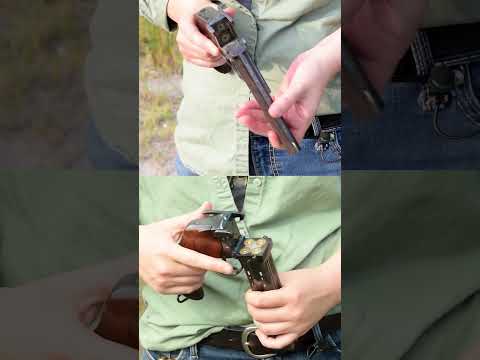
Revolver: 101

Published on July 27, 2021
Duration: 129:51

This video provides an in-depth breakdown of revolver mechanisms, moving beyond simple single vs. double action. It categorizes components by function: hammer, trigger, rotation, safety, and reloading. The presenter emphasizes the complexity often hidden within revolvers and explores various historical and modern designs, highlighting the ingenuity in their engineering. Understanding these functional groups is key to appreciating the nuances of revolver operation and design evolution.

Quick Summary

Revolver mechanisms are best understood by categorizing their functions: hammer (striking), trigger (release), rotation (cylinder advance), safety (preventing discharge), and reloading. This approach reveals the complexity and evolution of designs from percussion caps to modern metallic cartridges.

Chapters

  1. 00:33Introduction to Revolvers
  2. 01:40Understanding Revolver Mechanisms
  3. 04:07Categorizing Revolver Actions
  4. 05:00The Hammer: Striking and Priming
  5. 09:57The Trigger: Releasing the Hammer
  6. 12:36Single vs. Double Action
  7. 22:25Rotation: The Heart of the Revolver
  8. 29:54Stopping Cylinder Rotation
  9. 38:03Null State and Rotation Prevention
  10. 44:42Hammer Control and Safeties
  11. 50:49Automatic Rebound Mechanisms
  12. 54:43External Hammer Blocks
  13. 62:11Reloading and Unloading Procedures
  14. 63:37Loading Gates and Ejector Rods
  15. 68:24Ejector Rod as Safety?

Frequently Asked Questions

What are the main functional categories for understanding revolver mechanisms?

Revolver mechanisms can be understood by categorizing them into seven functional groups: hammer (striking element), trigger (release mechanism), rotation (cylinder advancement and locking), safety (preventing unintended firing), reloading (loading/unloading), and 'feel' (assembly/disassembly).

How does a single-action trigger differ from a double-action trigger in revolvers?

A single-action trigger performs only one function: releasing the hammer, which must be manually cocked first. A double-action trigger performs two functions: it cocks the hammer and then releases it with a single pull, allowing for faster firing.

What is the role of the 'hand' and 'cylinder stop' in a revolver's rotation system?

The 'hand' is a lever that engages teeth on the cylinder to rotate it to the next chamber. The 'cylinder stop' is a mechanism that locks the cylinder in place during firing, preventing unwanted rotation.

What are common safety features found in revolvers?

Common revolver safety features include the half-cock notch, manual safeties, and automatic hammer blocks. Many modern revolvers also incorporate automatic rebound mechanisms to prevent the hammer from resting directly on a primer.

Related News

All News →

More General Videos You Might Like

More from C&Rsenal

View all →