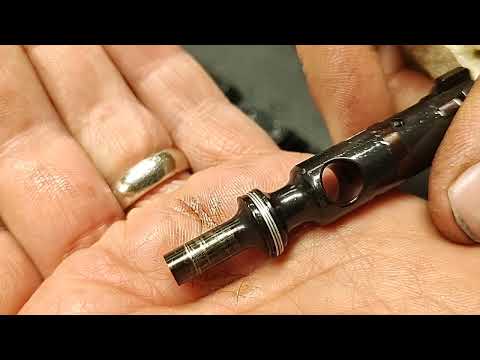
2 JP FMOS BCG Physicals

Published on June 15, 2020
Duration: 23:42

This video provides a detailed physical inspection and testing procedure for two JP Enterprises Full Mass Bolt Carrier Groups (BCGs). The instructor, with significant experience, meticulously checks various components including gas rings, extractors, firing pins, bolt dimensions, and carrier bores using specialized tools. The analysis highlights potential areas for improvement, such as the performance of one-piece gas rings in certain bores, while generally praising the machining and quality of the JP BCGs.


Quick Summary

JP Enterprises Full Mass BCGs undergo a comprehensive physical inspection, focusing on gas rings, bolt dimensions, carrier length, and internal bore finishes. While generally high-quality, the use of one-piece gas rings may require consideration for specific firearm setups, potentially benefiting from a swap to three-piece rings for optimal gas efficiency in all conditions.

Chapters

  1. 00:00Introduction & Unboxing JP BCGs
  2. 00:30Initial Inspection & Gas Ring Assessment
  3. 01:30Disassembly & Component Examination
  4. 02:30Extractor & Firing Pin Testing
  5. 04:00Bolt & Ejector Inspection
  6. 05:30Bolt Tail Seal & Support Shoulder Measurement
  7. 07:00Headspace Check
  8. 08:00Carrier Length & Gas Key Inspection
  9. 09:30Gas Key Reverse Torque Test
  10. 11:00Borescope Examination of Internal Components
  11. 12:00Carrier Three-Bore & Gas Ring Run Analysis
  12. 13:00Final Assessment & Recommendations

Frequently Asked Questions

What are the key components inspected on JP Enterprises Full Mass BCGs?

The inspection covers gas rings, cam pins, firing pins, retaining pins, extractors, bolts (including lugs, face, and ejector), bolt support shoulders, carrier length, gas keys, and internal bores using tools like calipers, gauges, and a borescope.

Are JP Enterprises Full Mass BCGs compatible with standard AR-15 headspace requirements?

Yes, the tested JP Enterprises Full Mass BCGs passed headspace checks using both .223 and 5.56 NATO go/no-go gauges with a test barrel, indicating proper compatibility with standard AR-15 platforms.

What is the significance of the carrier length measurement on a bolt carrier group?

A proper carrier length, like the 6.70 inches measured on the JP BCGs, is crucial for correct buffer engagement. If a carrier is too short, it can allow the buffer to slam into the retaining pin, potentially causing damage.

What are the implications of JP BCGs using one-piece gas rings?

One-piece gas rings on JP BCGs may not provide the same tension as three-piece rings and can sometimes fail traditional gas ring tests. However, they can still function well, especially in over-gassed systems, and contribute to a good seal if the bore dimensions are appropriate.

Related News

All News →

More Gunsmithing & DIY Videos You Might Like

More from School of the American Rifle

View all →