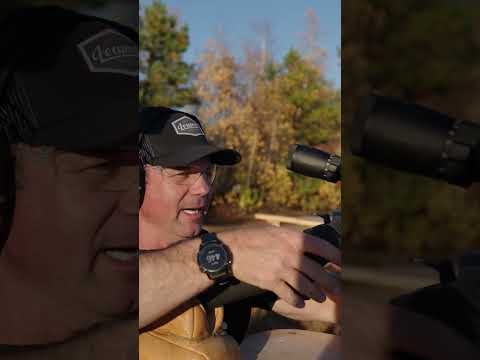
Beginner Series - Zeroing Your Gun

Published on May 8, 2026
Duration: 10:17

This guide details the procedure for zeroing a new red dot sight on a firearm, applicable to both handguns and rifles. It emphasizes starting at close range (approx. 7 yards) to establish a baseline group, then progressively moving to longer distances (20-25 yards for handguns, longer for rifles) while making windage and elevation adjustments. The technique involves controlled trigger press and understanding how different ammunition can affect point of impact.


Quick Summary

The recommended procedure for zeroing a red dot sight on a handgun begins at approximately 7 yards, firing 3-4 shots to establish a group. Adjust the optic's windage and elevation turrets to align the point of aim with the point of impact. Then, move to a longer distance, like 20-25 yards, to confirm and fine-tune the zero.

Chapters

  1. 00:02Listener Question: Zeroing Optics
  2. 00:10What is Zeroing?
  3. 00:39Zeroing Handguns: Initial Steps
  4. 01:32Close-Range Zeroing (7 Yards)
  5. 02:02Target Setup and Aiming Technique
  6. 02:23Trigger Control for Accuracy
  7. 02:41Assessing Shot Groups
  8. 03:09Making Optic Adjustments
  9. 03:50Zeroing at Longer Distances (20-25 Yards)
  10. 04:36Fine-Tuning Elevation
  11. 04:51Using a Rest for Stability
  12. 05:49Zeroing Rifles: Procedure
  13. 06:22Ammunition Impact on Zero
  14. 06:52Checking Zero Stability
  15. 07:37How Often to Check Zero
  16. 08:07Dry Fire Optic Check
  17. 08:33Bracing for Stability
  18. 08:56When to Re-Check Zero
  19. 09:35Pre-Match Zero Check
  20. 09:53Zeroing as 'Set It and Forget It'

Frequently Asked Questions

What is the recommended starting distance for zeroing a red dot sight on a handgun?

It is recommended to start zeroing a red dot sight on a handgun at approximately 7 yards. This close distance allows for quick adjustments and confirmation of the optic's basic alignment with the firearm's barrel. Firing 3-4 shots to form a group is advised for beginners to gather sufficient data for adjustments.

How do you adjust a red dot sight for windage and elevation?

Red dot sights typically have two adjustment turrets. One controls windage (left-right adjustments), and the other controls elevation (up-down adjustments). These turrets are usually marked with directional indicators. By turning these turrets, you move the point of aim within the optic to match the point of impact of your shots.

How often should I check the zero on my firearm's red dot sight?

For most applications, a red dot sight's zero is quite stable and doesn't need frequent checking. It's generally considered a 'set it and forget it' adjustment. You might re-check if you change ammunition types significantly, if the optic has been subjected to severe shock, or before a high-stakes competition.

What is the best way to check if a red dot sight is loose on the firearm?

A reliable method to check for optic looseness is to gently wiggle the optic with one hand while holding the firearm's slide with the other. If there's any play, the optic may be loose. Another method is to dry fire while focusing on the dot; if the dot moves upon trigger break, it indicates a potential issue.

More Training & Techniques Videos You Might Like

More from Joel Park

View all →