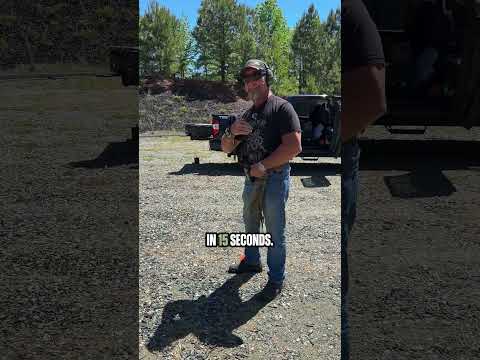
Confirmation drill (Original footage)

Published on July 18, 2025
Duration: 5:57

This video details a confirmation drill designed to improve shooting accuracy and speed by comparing three distinct firing confirmation methods. The drill involves engaging three targets at five yards using immediate physical confirmation, visual confirmation (blurry front sight/dot), and precise sight alignment. The instructor emphasizes analyzing time differences and accuracy to inform shooting choices in various conditions.


Quick Summary

A firearm confirmation drill compares three firing methods: immediate physical confirmation (0.4s avg), blurry sight confirmation (0.5s avg), and sharp sight confirmation (0.75s avg). Analyzing these times and accuracy helps shooters choose the best technique based on stress and target difficulty.

Chapters

  1. 00:07Introduction to Confirmation Drill
  2. 00:09Drill Setup: Targets and Distance
  3. 00:15Starting Position: Low Ready & Consistency
  4. 00:31Buzzer: Presentation and Engagement
  5. 00:38Confirmation 1: Immediate Fire
  6. 01:10Confirmation 2: Blurry Front Sight
  7. 01:40Confirmation 3: Sharp Front Sight on Target
  8. 02:01Drill Focus: Comparing Confirmations
  9. 02:21Applying Data to Matches
  10. 02:51Developing Transition Skills
  11. 03:12Grip and Sight Alignment
  12. 03:19Demonstration Start
  13. 03:58Confirmation 1 Results (0.4s)
  14. 04:35Confirmation 2 Results (0.5s)
  15. 05:11Confirmation 3 Results (0.75s)
  16. 05:16Comparing Time Differences
  17. 05:40Conclusion: Data for Decision Making

Frequently Asked Questions

What is the purpose of a firearm confirmation drill?

A firearm confirmation drill, like the one demonstrated, helps shooters analyze the speed and accuracy trade-offs between different firing confirmation methods. By comparing immediate physical confirmation, blurry sight confirmation, and sharp sight confirmation, shooters can gather data to optimize their shooting strategy based on stress levels and target difficulty.

What are the three types of confirmation discussed in the drill?

The drill covers three confirmation types: 1) Immediate physical confirmation (firing as the gun reaches the eyeline), 2) Visual confirmation (firing when the front sight is blurry, focusing on the target), and 3) Precise confirmation (firing when the front sight is sharp and perfectly aligned on the target).

How does the confirmation drill help improve shooting performance?

By timing and analyzing accuracy for each confirmation type, shooters gain valuable data. This allows them to understand which method is fastest, which is most accurate, and how to best apply them in different scenarios, such as high-stress competitions versus deliberate target engagement.

What are the average times for each confirmation method?

In the demonstrated drill, Confirmation 1 (immediate fire) averaged around 0.4 seconds, Confirmation 2 (blurry sight) averaged about 0.5 seconds, and Confirmation 3 (sharp sight on target) averaged approximately 0.75 seconds. The average time difference between confirmations was 0.2 seconds.

How can a shooter improve their sight alignment during presentation?

If a shooter struggles with the front sight or red dot not being on the intended spot during presentation, they should practice transition drills. Additionally, working on grip consistency is crucial to develop good index and automatic sight alignment for more accurate shots.

More Training & Techniques Videos You Might Like

More from Hwansik Kim

View all →