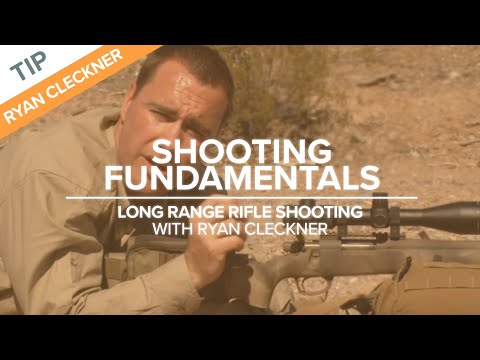
Reading Wind with Optics | Long-Range Rifle Shooting with Ryan Cleckner

Ryan Cleckner, a former Special Operations sniper, details how to read wind for long-range shooting using optics. He emphasizes that wind meters are limited and understanding wind along the bullet's path is crucial. The video demonstrates how to read mirage through spotting scopes to estimate wind speed and direction, with specific patterns indicating different wind velocities.

Quick Summary

To read wind for long-range shooting without a meter, observe mirage through optics. Focus on the target, then slightly de-focus to see heat waves. Vertical boiling means no wind, while horizontal movement indicates 10+ mph. Assess mirage 1/2 to 2/3rds the distance to the target.

Chapters

  1. 00:16Introduction to Wind Reading Challenges
  2. 01:14Limitations of Wind Meters
  3. 02:46Reading Mirage with Optics
  4. 03:58Interpreting Mirage Patterns for Wind Speed
  5. 04:40Determining Wind Direction with Mirage

Frequently Asked Questions

How can I read wind for long-range shooting without a wind meter?

You can read wind by observing mirage through high-quality optics like spotting scopes. Different mirage patterns, such as boiling, angled, or horizontal movement, indicate varying wind speeds and directions along the bullet's path.

What is the best way to see mirage for wind reading?

Focus your spotting scope on the target, then slightly back off the focus. This technique makes the heat waves (mirage) visible in front of the target, allowing you to interpret their movement for wind assessment.

How do mirage patterns relate to wind speed?

Vertical 'boiling' mirage suggests no wind or a direct head/tail wind. A 45-degree angle indicates about 3-5 mph, while horizontal movement signifies 10+ mph. Flatter, straighter mirage points to higher velocities over 20 mph.

Why are wind meters not sufficient for long-range shooting?

Wind meters only measure wind speed at the shooter's exact location. For long-range accuracy, it's crucial to understand how wind conditions change along the entire trajectory of the bullet, ideally assessed at half to two-thirds of the target distance.

Related News

All News →

More Training & Techniques Videos You Might Like

More from NSSF—The Firearm Industry Trade Association

View all →