What are MILs? How to Use Milliradians in Long-Range Shooting | Ryan Cleckner

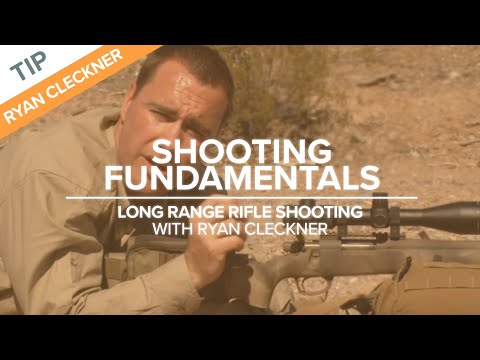
This guide, presented by former Special Operations Sniper Ryan Cleckner, breaks down the practical application of Milliradians (MILs) in long-range shooting. It covers the fundamental definition of a MIL, how scope adjustments correlate to target impact, and the mathematical process for calculating necessary corrections. Cleckner also touches upon essential concepts like DOPE and the strategic advantage of a 100-meter zero, offering expert insights for intermediate to advanced shooters.

Quick Summary

Milliradians (MILs) are angular measurements used in long-range shooting, where 1 MIL equals 1/1000th of a radian. This translates to 1 meter of subtension at 1000 meters. Most scopes adjust in 0.1 MIL increments, meaning each click moves impact by 1 cm at 100 meters, enabling precise calculation of shot corrections for bullet drop and windage.

Chapters

  1. 00:00Introduction to Milliradians
  2. 00:22Defining Milliradian (MIL)
  3. 01:29MILs as a Ratio Explained
  4. 03:08Scope Adjustments (0.1 MIL = 1cm @ 100m)
  5. 04:51Calculating Shot Corrections
  6. 07:35DOPE and Trajectory Compensation
  7. 08:53The 100-Meter Zero Strategy

Frequently Asked Questions

What is a Milliradian (MIL) in shooting?

A Milliradian (MIL) is an angular measurement representing 1/1000th of a radian. In practical terms for shooting, it means 1 MIL subtends 1 meter of distance at 1000 meters, or 1 centimeter at 100 meters. This ratio is fundamental for calculating long-range adjustments.

How do scope adjustments in MILs translate to target impact?

Most rifle scopes adjust in 0.1 MIL increments. This means each click of the turret moves your point of impact by 1 centimeter at 100 meters. At 1000 meters, a 0.1 MIL adjustment would move impact by 10 centimeters.

How do you calculate shot corrections using MILs?

To calculate corrections, determine your miss distance in centimeters at the target range. Then, use the ratio that 0.1 MIL equals 1 cm at 100 meters (or 1 meter at 1000 meters) to find the required MIL adjustment. For example, a 12cm miss at 600m requires a 0.2 MIL adjustment.

Why is a 100-meter zero often preferred in long-range shooting?

A 100-meter zero is often preferred because it accounts for the height of the scope above the rifle's bore. This setup ensures that even for targets closer than 100 meters, the necessary upward adjustment is already factored in, simplifying holdovers.

More Training & Techniques Videos You Might Like

More from NSSF—The Firearm Industry Trade Association

View all →