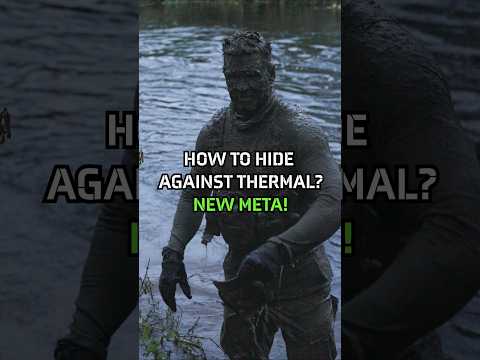
It's snorkel time 🤿

Published on June 11, 2025
Duration: 0:58

This video tests the effectiveness of water for thermal concealment against drones. The experiment demonstrates that even a shallow depth of 1-2 cm of water completely masks a heat signature. Using a tactical snorkel allows for deeper submersion, further enhancing stealth capabilities in aquatic environments.

Quick Summary

Water is highly effective for hiding heat signatures from thermal drones. Even 1-2 cm of submersion is enough to mask a thermal signature. Using a tactical snorkel allows for deeper concealment, making it a viable tactic against thermal surveillance.

Chapters

  1. 00:00Introduction: Thermal Drone Test
  2. 00:10Experiment Setup: Depth & Snorkel
  3. 00:20Thermal Imaging Results
  4. 00:35Conclusion: Water's Concealment Power

Frequently Asked Questions

Can you hide from thermal drones underwater?

Yes, water is extremely effective at hiding heat signatures from thermal drones. Even a very shallow layer of water, as little as 1-2 cm, is sufficient to completely mask a person's thermal output, making them invisible to thermal sensors.

How deep do you need to be to avoid thermal detection?

You only need to be submerged 1-2 cm underwater to effectively hide your heat signature from thermal drones. Deeper submersion, facilitated by a snorkel, further enhances this concealment.

What is the purpose of a tactical snorkel in thermal concealment?

A tactical snorkel allows a user to remain submerged deeper in the water while still being able to breathe. This increased depth significantly enhances the effectiveness of water as a thermal concealment method against drone surveillance.

How does water affect thermal imaging?

Water acts as an excellent insulator and visual barrier for thermal imaging. It absorbs and dissipates heat rapidly, preventing the thermal camera from detecting the body's heat signature, effectively rendering the submerged person invisible.

More Tactical & Gear Videos You Might Like

More from FalconClaw

View all →