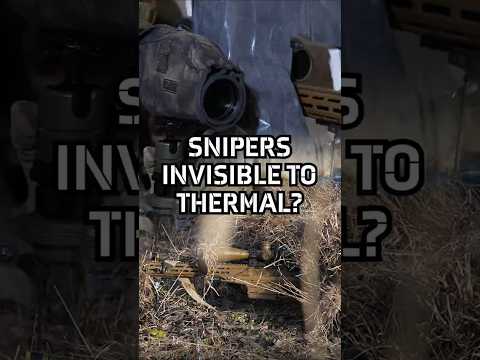
Surprising Result?!

Published on February 21, 2026
Duration: 0:46

This video from FalconClaw explores the effectiveness of an inflatable T-Rex costume for thermal concealment. Despite the entertaining premise, the test conducted in a snowy outdoor field demonstrated that the suit, even with an internal air circulation pump, fails to mask a human's heat signature. The thermal imaging footage clearly showed the suit as a bright heat signature at 200 meters, concluding that such costumes are not viable for thermal evasion. The host, identified as FalconClaw Host, exhibited experienced authority in assessing thermal optics and cold environment contrast.


Quick Summary

Inflatable dinosaur costumes are ineffective for thermal concealment. Testing by FalconClaw showed that even with an internal air pump, the suit fails to mask a human's body heat signature, remaining highly visible on thermal imaging at distances up to 200 meters in sub-freezing conditions.

Chapters

  1. 00:00Thermal Concealment Discussion
  2. 00:04Inflatable Suit Proposal
  3. 00:13Initial Thermal Test
  4. 00:23200-Meter Distance Test
  5. 00:33Suit Mechanics & Heat Analysis
  6. 00:41Final Test Conclusion

Frequently Asked Questions

Can an inflatable dinosaur costume be used for thermal concealment?

No, testing by FalconClaw demonstrated that inflatable dinosaur costumes are ineffective for thermal concealment. Even with an internal air pump, the suit failed to mask the wearer's body heat signature, remaining highly visible on thermal imaging at distances up to 200 meters in sub-freezing conditions.

How effective is thermal imaging in cold weather?

Thermal imaging remains highly effective in sub-freezing conditions. As shown in the FalconClaw video, heat signatures are clearly distinguishable against cold backgrounds, making passive concealment methods like inflatable suits easily detectable.

What are the limitations of inflatable suits for thermal evasion?

Inflatable suits lack the necessary cooling mechanisms to sufficiently mask a human's body heat. The internal air circulation pump is not enough to prevent the wearer's heat signature from being detected by thermal imagers, rendering them useless for thermal evasion.

What equipment was used to test thermal concealment?

The test utilized a handheld thermal monocular, described as a Pulsar Axion style unit, capable of displaying both 'White Hot' and 'Colorized' palettes. This allowed for clear visualization of heat signatures in sub-freezing environments.

More Tactical & Gear Videos You Might Like

More from FalconClaw

View all →