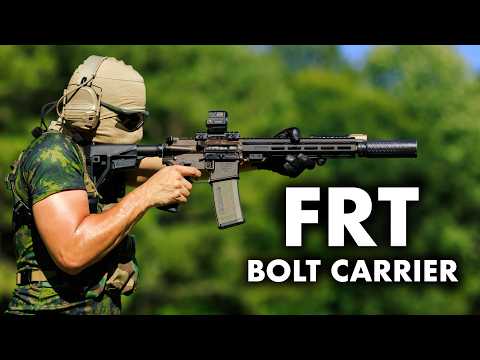
Your AR-15 Isn't Mil-Spec and That's OK

Published on July 12, 2014
Duration: 5:36

This video clarifies that most civilian AR-15s are not 'Mil-Spec' and explains that adherence to military tolerances and dimensions is more critical than strict Mil-Spec compliance. The instructor emphasizes that the bolt carrier group (BCG) and barrel are the most important components for a quality AR-15 build, advising viewers to invest most of their budget in these parts to avoid potential issues like headspace, cycling, feeding, and accuracy problems. While Mil-Spec coatings like phosphate are mentioned, the focus remains on dimensional accuracy for reliable function.

Quick Summary

For AR-15 reliability, focus on critical tolerances and dimensions rather than strict Mil-Spec compliance. The bolt carrier group (BCG) and barrel are the most important components; investing heavily in these parts prevents common issues like headspace, cycling, and feeding problems.

Chapters

  1. 00:03Introduction: Mil-Spec Controversy
  2. 00:39What is Mil-Spec?
  3. 00:54Your AR-15 Isn't Mil-Spec (And That's OK)
  4. 01:19Importance of Mil-Spec Tolerances and Dimensions
  5. 01:30Billet vs. Forged Receivers
  6. 02:01Critical Dimensions for Receivers
  7. 02:31True Mil-Spec Example (Colt M16/M4)
  8. 02:58Piston Driven vs. Direct Impingement
  9. 03:20The Bottom Line: Tolerances Matter Most
  10. 03:27Most Important Parts: BCG and Barrel
  11. 03:40Consequences of Poor BCG/Barrel Quality
  12. 04:00Investing in BCG and Barrel
  13. 04:04Coating vs. Dimensions (Fail Zero BCG)
  14. 04:39Don't Listen to the Haters
  15. 04:51Build What You Want
  16. 05:11Conclusion: Good BCG and Barrel = Shoots Fine

Frequently Asked Questions

What is the most important factor for an AR-15's reliability?

The most critical factors for an AR-15's reliability are the bolt carrier group (BCG) and the barrel. Investing in high-quality versions of these two components is essential to prevent issues like headspace problems, cycling failures, feeding malfunctions, and poor accuracy.

Does my AR-15 need to be strictly Mil-Spec to function well?

No, your AR-15 does not need to be strictly Mil-Spec. What's more important is that critical components adhere to military tolerances and dimensions. Many civilian AR-15s use different materials or coatings but can still be highly reliable if built to the correct specifications.

What's the difference between Mil-Spec and billet AR-15 receivers?

Mil-Spec AR-15 receivers are typically forged from 7075 T6 aluminum. Billet receivers are machined from solid blocks of aluminum. While billet receivers are not usually Mil-Spec, they can still be manufactured to precise tolerances and offer excellent performance.

Why are the bolt carrier group and barrel so important for an AR-15?

The BCG and barrel are crucial because they directly impact headspace, cycling, feeding, and accuracy. A poorly manufactured BCG or barrel can lead to a wide range of malfunctions and performance issues, making them the primary areas to focus investment for a quality build.

Related News

All News →

More Tactical & Gear Videos You Might Like

More from nsz85

View all →