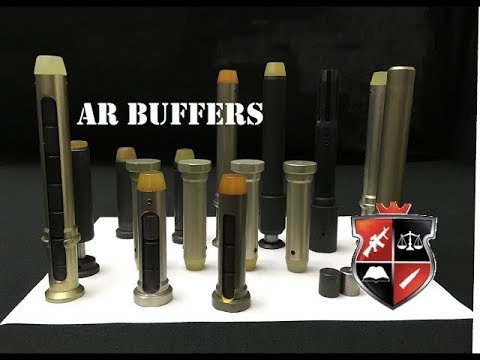
The Buffer Part 2 - Buffers use in Commercial Rifles

Published on November 1, 2025
Duration: 49:01

This video explains how buffer weights are used to tune commercial rifles, particularly when dealing with ammunition variables and overgassed systems. The instructor details how different buffer weights (H1, H2, H3) can mitigate issues like bolt carrier bounce and fast cycling caused by higher-pressure ammunition, by slowing down the action. He emphasizes that military rifles are designed with known variables, while commercial rifles must accommodate a wider range of ammunition, making buffer tuning a common adjustment.

Quick Summary

Commercial AR-15 rifles often require buffer tuning due to ammunition variability. Heavier buffers like H1, H2, and H3 can slow down the action, mitigating overgassing issues caused by higher-pressure ammunition and improving ejection patterns from 1-2 o'clock towards the ideal 3-5 o'clock.

Chapters

  1. 00:00:08Introduction: Buffer Updates & Military vs. Commercial
  2. 00:01:14Military Rifle Design: Known Variables & Ammunition
  3. 00:02:17Commercial Rifle Challenges: Ammunition Variability
  4. 00:03:06Colt's Design Philosophy: M855 Ammunition & Gas System
  5. 00:04:43Pressure from Civilians: Adapting to Cheaper Ammunition
  6. 00:05:02Solutions: Enlarging Gas Ports vs. Buffer Weights
  7. 00:06:06Modern Ammunition & Overgassing Issues
  8. 00:07:01Negative Effects of Overgassing
  9. 00:08:29Factors Affecting Port Pressure: Gas Port & Block Location
  10. 00:11:20Buffer Weights for Tuning: H1, H2, H3 Explained
  11. 00:12:00History of H2 Buffer: Feeding Issues with M855
  12. 00:14:19Buffer Evolution: Edgewater to H-Series
  13. 00:16:39Using Buffers for Over/Under Gas
  14. 00:18:00300 Blackout Buffer Considerations
  15. 00:18:529mm SMG Buffers: Direct Blowback vs. 5.56 Rifles
  16. 00:20:09Colt's Buffer Research & M4 Recommendations
  17. 00:23:07Hydraulic Buffers: History and Modern Use
  18. 00:25:20The Voltor A5 System: Intermediate Buffer Design
  19. 00:28:34LMT Rifles: Gas Port Size & Buffer Choice
  20. 00:29:43.308 Buffer Systems & AR-10 Platforms
  21. 00:35:34Balancing the Gas System: Variables Explained
  22. 00:36:09Case Study: Wolf Ammunition Failure in Short Barrels
  23. 00:38:43.223 Remington vs. 5.56 NATO Differences
  24. 00:39:46Ammunition Variation Case Study: Chilean Army M4s
  25. 00:43:25Personal Rifles vs. Duty Weapons: Tuning Considerations
  26. 00:45:20Recoil Springs vs. Buffers for Tuning
  27. 00:47:55Military Overgassing for Reliability
  28. 00:48:40Conclusion: Ammunition is the Key Variable

Frequently Asked Questions

What is the primary reason commercial rifles might need buffer tuning?

Commercial rifles often need buffer tuning because they are designed to function with a wide range of ammunition, from low-pressure to high-pressure loads. This variability can lead to overgassing or undergassing, affecting cycling speed and reliability, unlike military rifles designed for specific ammunition.

How do different buffer weights (H1, H2, H3) affect an AR-15's operation?

Heavier buffers like H1, H2, and H3 add mass to the bolt carrier group's rearward travel. This slows down the action, helping to mitigate issues caused by overgassing, such as bolt carrier bounce or fast cycling, and can improve extraction reliability with hotter ammunition.

What are the ideal ejection patterns for an AR-15 or M4 carbine?

The ideal ejection pattern for an AR-15 or M4 is typically between the 3:00 and 5:00 o'clock positions. Ejecting brass significantly earlier, like at 1:00 or 2:00 o'clock, indicates the rifle is cycling too fast due to high port pressure.

Can I use a 9mm SMG buffer in a 5.56 AR-15 rifle?

No, you should not use a 9mm SMG buffer in a 5.56 AR-15. 9mm SMGs use direct blowback and require a heavy buffer for their operation, which is fundamentally different from the gas-operated system of a 5.56 rifle. Using it can cause malfunctions like short-stroking.

Why are military rifles often slightly overgassed?

Military rifles are intentionally designed to be slightly overgassed to ensure reliable function across a wide range of environmental conditions, including extreme heat and cold, and when using suppressors. This wider operating window provides greater overall reliability.

More Training & Techniques Videos You Might Like

More from SmallArmsSolutions

View all →