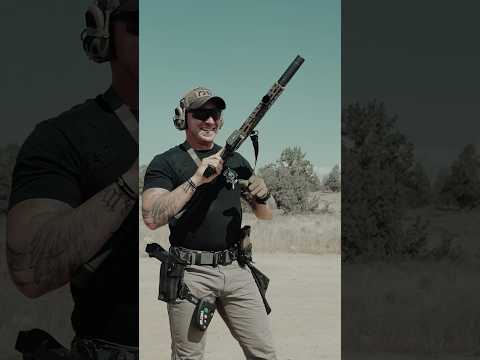
The Foundations of Shooting

Published on December 7, 2025
Duration: 80:38

This video emphasizes process-oriented training over result-based training for firearms proficiency. It introduces a series of drills, starting with 'Trigger Control at Speed,' to build a durable grip and develop trigger manipulation skills. The progression includes 'One Shot Return,' '50/50s,' and 'Doubles,' progressively increasing distance and complexity to refine visual anchoring, grip consistency, and predictive shooting capabilities. The instructor stresses the importance of analyzing feedback to understand cause and effect, rather than focusing solely on the target outcome.

Quick Summary

Process-oriented firearms training focuses on the mechanics and feedback of each shooting action, enabling continuous learning and correction. This contrasts with result-based training, which only assesses the final outcome and offers limited diagnostic information, often leading to skill plateaus. By analyzing feedback and refining techniques, shooters can develop a deeper understanding and higher proficiency.

Chapters

  1. 00:00:00Introduction: Process vs. Result Training
  2. 00:01:03The Goal: Building Skill Surplus
  3. 00:01:45Process-Oriented Training Explained
  4. 00:02:56Training as a Bank Account Analogy
  5. 00:03:42Separating Training from Real Life
  6. 00:04:28Uncomfortable vs. Uncontrolled Training
  7. 00:05:17Fundamentals Over Advanced Techniques
  8. 00:06:17Aggressive Shooting & Accountability
  9. 00:06:40Drill 1: Durable & Consistent Grip
  10. 00:07:01Trigger Press: Tomorrow's Problem
  11. 00:07:46Drill: Trigger Control at Speed
  12. 00:09:04Dry Fire Demonstration
  13. 00:10:04Common Mistakes: Grip Pressure Changes
  14. 00:11:16Assessing Dot Movement
  15. 00:11:45Common Problems: 'Helping' the Gun
  16. 00:12:17Exploratory Training & Self-Correction
  17. 00:13:00Key Areas: Structure, Pressure, Tension
  18. 00:13:37Gun Behavior: Predictability is Key
  19. 00:14:15Maintaining Relaxed Posture
  20. 00:15:14Assessing Appropriate Tension
  21. 00:16:07Adjusting for Hand Size
  22. 00:16:36Demonstration: Consistent Grip
  23. 00:17:04Identifying Deviations
  24. 00:17:41Foundation for Accountability
  25. 00:18:15Laser Trainer vs. Live Fire Feedback
  26. 00:19:52Benefits of Dry Fire Training
  27. 00:20:33Assessing Grip Durability
  28. 00:20:50Drill 2: One Shot Return
  29. 00:21:06Goal: Predictive Shooting
  30. 00:22:00Observing Gun Return
  31. 00:22:20Visual Focus: Anchoring on the Pacer
  32. 00:23:22Separating Shooting from Return
  33. 00:24:06Hand-Eye Coordination Analogy
  34. 00:24:42Locking Vision to the Pacer
  35. 00:25:17Isolating the Return Component
  36. 00:26:12Assessing Return Speed and Precision
  37. 00:27:15Factors Affecting Return: Vision, Tension
  38. 00:28:13Key Behavior: Quick & Precise Return
  39. 00:28:25Drill 3: 50/50s
  40. 00:29:26Merging Skills: 50/50s
  41. 00:30:18Setup: One Round in Chamber
  42. 00:30:29Smashing Trigger Twice
  43. 00:31:14Learning Trigger Manipulation the Hard Way
  44. 00:31:3450/50s Demonstration
  45. 00:32:07Aiming Strategies: Predictive Shooting
  46. 00:33:14Incorrect 50/50s: Waiting for Dot
  47. 00:34:15Correct 50/50s: Pressing Trigger Rapidly
  48. 00:34:51Information from Non-Scorable Aspects
  49. 00:35:46Drill 4: Doubles
  50. 00:36:00Modification to Ben Stoer Doubles
  51. 00:36:10Focus on 'What Right Looks Like' First
  52. 00:37:23Doubles Demonstration: Speed & Grouping
  53. 00:38:44Analyzing Doubles: What Did I See/Feel?
  54. 00:39:25Shot Calling: Tying Cause & Effect
  55. 00:40:26Analyzing Doubles Feedback
  56. 00:40:43Micro-Mistakes: Visual Stimulus vs. Physical Reaction
  57. 00:41:41Key Components of Doubles Process
  58. 00:42:29Incorrect Doubles: Waiting for Return
  59. 00:43:40Increasing Distance: 10 Yards
  60. 00:44:05Desensitization and Comfort Zone
  61. 00:45:1550/50s at 10 Yards
  62. 00:46:02Doubles at 10 Yards
  63. 00:47:54Nitpicking for Skill Development
  64. 00:48:35Corrections Without Slowing Down
  65. 00:49:54Post-Correction Analysis
  66. 00:50:59Increasing Distance: 15 Yards
  67. 00:51:21Visual Component Becomes Critical
  68. 00:53:11Standards at 15 Yards
  69. 00:53:4750/50s at 15 Yards
  70. 00:54:53Doubles at 15 Yards
  71. 00:56:50Increasing Distance: 20 Yards
  72. 00:57:2850/50s at 20 Yards
  73. 00:58:02Doubles at 20 Yards
  74. 00:58:40Visual Discipline and Target Size
  75. 01:00:48Increasing Distance: 25 Yards ('The Man Maker')
  76. 01:01:10Importance of Gradual Progression
  77. 01:01:4650/50s at 25 Yards
  78. 01:02:26Doubles at 25 Yards
  79. 01:03:39Shot Calling Challenges at Distance
  80. 01:04:07Exploratory Training: Using Yourself as Barometer
  81. 01:04:44Focus on Gun Behavior, Not Just Bullets
  82. 01:05:06Critique of Bullet Hole Interpretation Wheels
  83. 01:05:47Technique vs. Principles
  84. 01:06:11Teaching How to Fish: Exploratory Process
  85. 01:06:47Technique is Individual, Principles are Universal
  86. 01:07:22Universal Principles: Durable Grip, Consistent Behavior
  87. 01:07:46Finding Your Own Technique

Frequently Asked Questions

What is the difference between process-oriented and result-based firearms training?

Process-oriented training focuses on the mechanics and feedback of each action in the shooting sequence, allowing for continuous learning and correction. Result-based training, like qualifications, only looks at the final outcome (hit/miss) and offers limited diagnostic information, often leading to skill plateaus.

How does the 'Trigger Control at Speed' drill help improve firearm grip?

This drill forces an uncomfortable and aggressive trigger press with the finger far outside the trigger guard. This discomfort reveals subconscious grip pressure changes and inconsistencies that occur when a shooter is not fully comfortable with the manipulation, highlighting areas for grip improvement.

What is predictive shooting in firearms?

Predictive shooting is a training strategy where you engage targets accurately at high speeds, faster than conscious processing. It relies on trusting fundamental skills like grip, visual anchoring, and trigger control, allowing the firearm to perform predictably without waiting for conscious confirmation.

Why is visual anchoring important in firearms training?

Visual anchoring involves locking your vision onto a small, precise point on the target. This practice drives the firearm's return to the aiming point with greater precision. Expanding your vision too broadly reduces the gun's ability to return to the exact spot, impacting accuracy, especially at distance.

How should shooters approach learning new firearms techniques?

Instead of solely adopting specific techniques, shooters should understand the underlying principles (like durable grip and consistent gun behavior) and use exploratory training to discover techniques that work best for their individual physiology, firearm, and abilities. This process-oriented approach fosters self-teaching and long-term skill development.

More Training & Techniques Videos You Might Like

More from Achilles Heel Tactical

View all →